Technology
Every time a transistor switches, the energy that drove the switch is dumped as heat, billions of times a second across billions of devices. Our gates never dump energy like that: an AC clock reshapes each gate's energy landscape, and the input decides which valley the state settles into. The junctions respond in picoseconds, so even at gigahertz clock rates the change looks slow to the device and switching stays smooth and efficient: adiabatic.
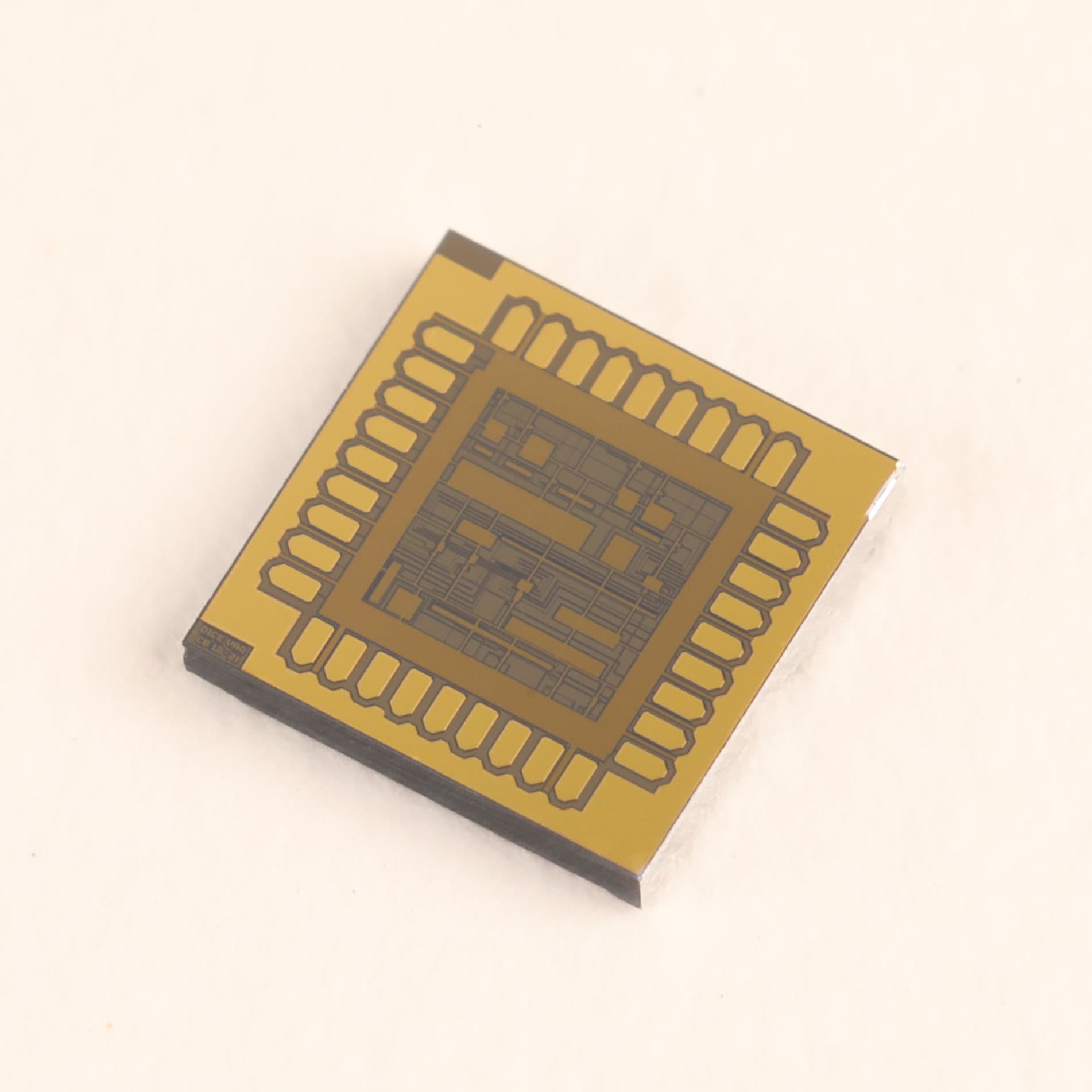
The chip is superconducting end to end. With zero resistance in the wiring, moving a bit across the die costs almost nothing. The interconnect power that dominates a conventional processor simply is not there.
The processor runs at 4 kelvin inside a closed-cycle cryocooler, the same commodity refrigeration behind MRI machines and quantum computers. Cooling to that temperature costs real power, but our efficiency is measured at the system level, cooling included.
Efficiency
- 10-100x more compute per watt
Cooling included
- Digital logic near the energy limit
Close to the floor physics sets
Compatibility
- Runs standard AI models out of the box
No retraining needed
- Purpose-built for AI inference
The fastest-growing compute workload
Manufacturability
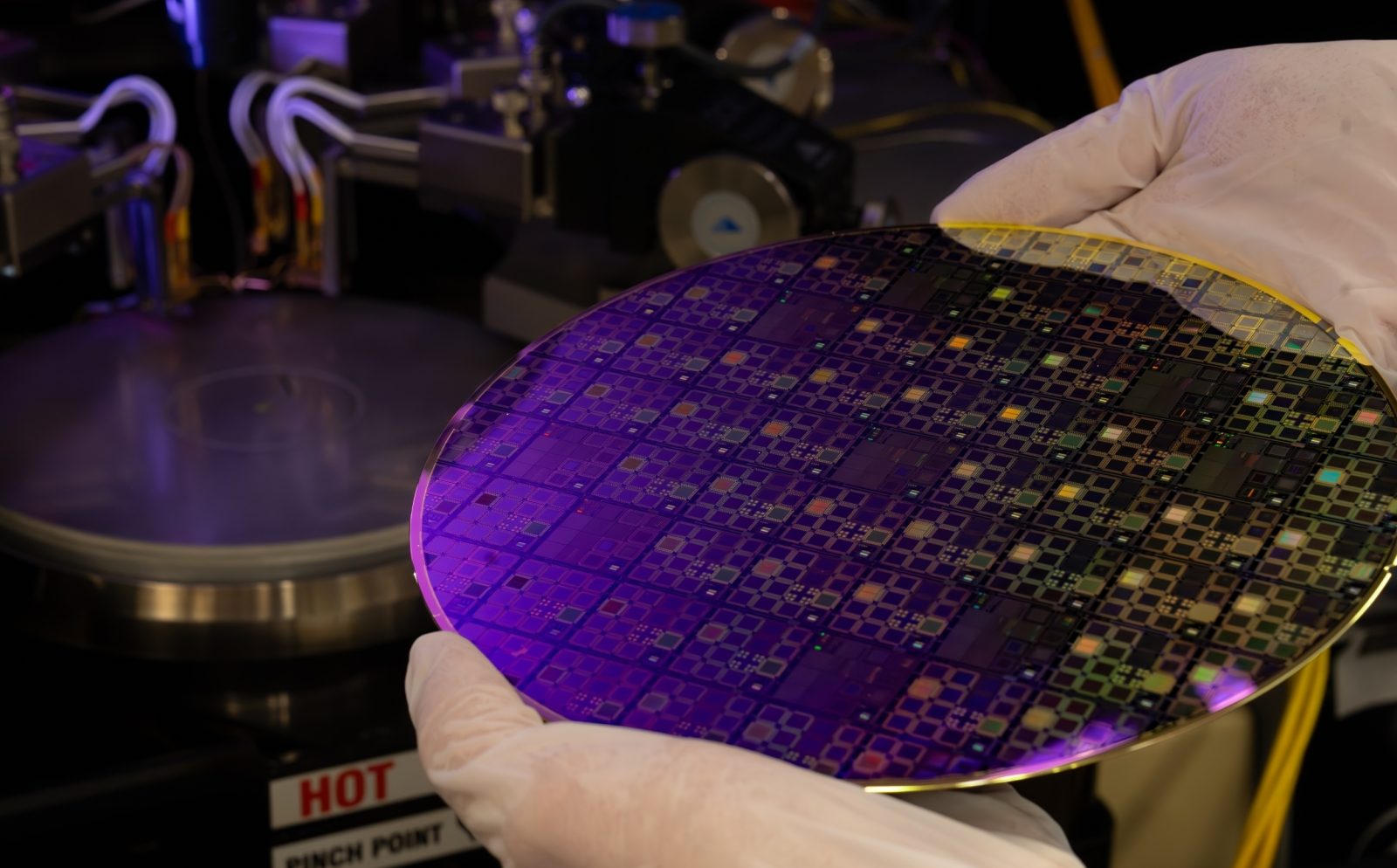
- Fabricated in existing commercial foundries
No exotic processes
- Uses commodity cryogenics
The same mature technology behind MRI machines, quantum computers, and liquefied natural gas plants
- Full-stack digital twin
Proven from PyTorch to Josephson junction dynamics
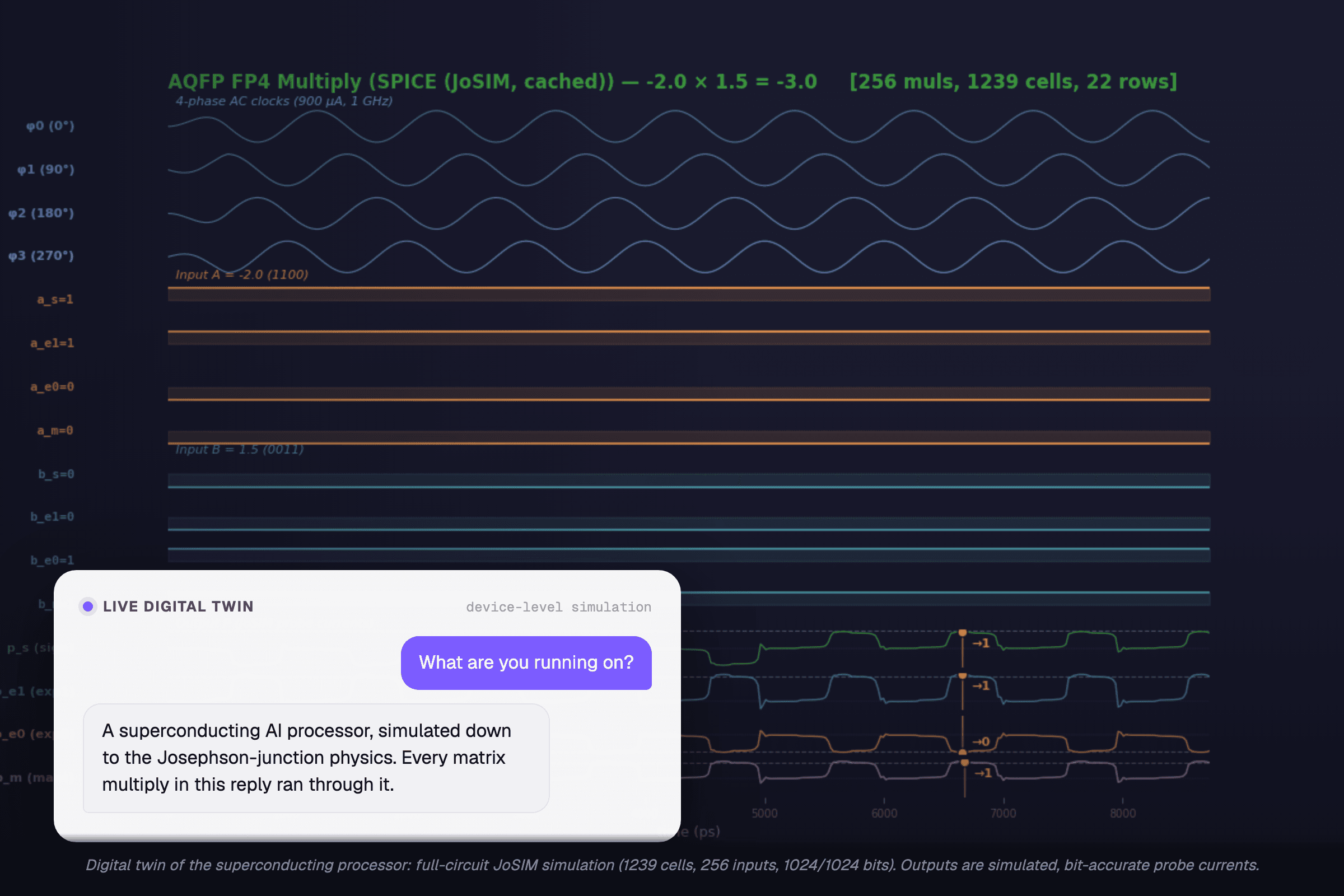
A digital twin demo of our cryogenic compute system executes the matrix arithmetic of a real language model from a device-level model that's been calibrated against fabricated superconducting circuits. Access by invitation.